



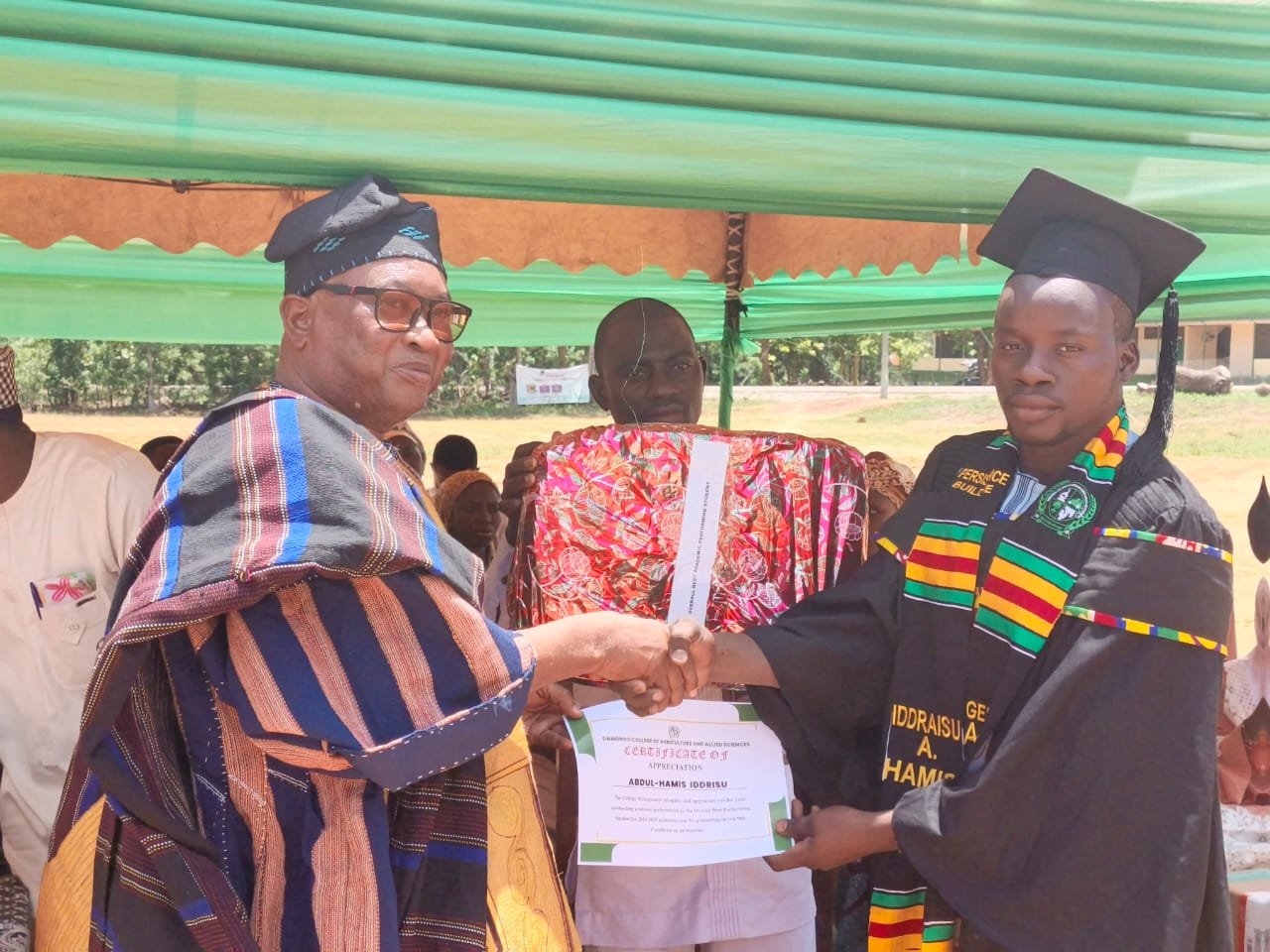
The Damongo College of Agriculture and Allied Sciences came alive with colour, pride and a deep sense of accomplishment on Thursday, May 14, 2026, as it hosted its 26th Graduation Ceremony for the 2024/2025 academic year, drawing a distinguished audience of traditional leaders, government officials, institutional heads, security services, parents, guardians, members of the media and invited guests.
The ceremony, which was chaired by HE. Tingawura Alhaji Seidu Sampson Abudu, Member of the Council of State for the Savannah Region, marked a defining moment in the lives of the graduating students and a significant milestone in the history of the institution. It was an occasion filled not only with celebration, but also reflection on progress made, challenges faced, and the road ahead for agricultural education and national development.
In his welcome address, the Principal of the college, Alhaji Mohammed Nuhu Adam, described the ceremony as both an honour and a moment of pride, emphasizing the importance of the occasion. “Graduation ceremony is a significant milestone in the life of students because it signals an ending to one’s educational journey and the beginning of a working journey,” he stated. He further urged the graduates to make meaningful impact with their training, adding, “I strongly advise you to put to good use the knowledge, skills and attitude you acquired to contribute to food security, economic prosperity and environmental sustainability.”
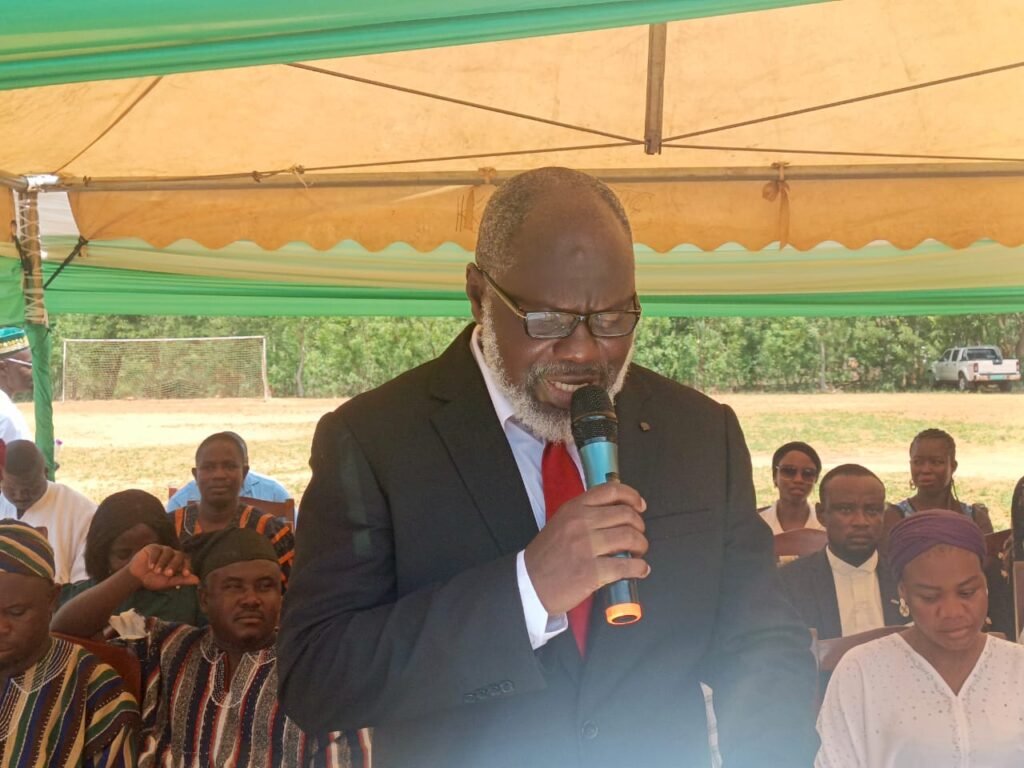
He announced that out of 179 students admitted in 2024, a remarkable 175 successfully completed their two-year certificate programme in agriculture, representing an impressive completion rate of nearly 99 percent. The graduating class consisted of 44 females and 131 males.
Reflecting on the institution’s progress, the Principal noted that despite operating with limited financial resources largely derived from academic fees and internally generated funds, the college had made significant gains in both academic delivery and infrastructure development. Among these achievements was the commercial production of certified and foundation seeds of maize and soybean in partnership with SARI, as well as the establishment of an aquaponics system within an agroforestry ecosystem with a total pond capacity of 12,000 tilapia and catfish. Extensive renovation works, training programmes for women in mechanized agriculture, establishment of an e-library and career platforms, improved furniture, support from WFP and WUSC with modern agricultural equipment, and the installation of solar-powered mechanized boreholes were all highlighted as part of efforts to improve teaching, learning and practical training.
Despite these gains, he raised concern over ongoing challenges including inadequate lecture halls, lack of an auditorium, insufficient accommodation for students and staff, absence of a gatehouse and fencing, an unfit library space, shortage of key non-teaching staff and encroachment on school lands, stressing the need for significant investment to address them.
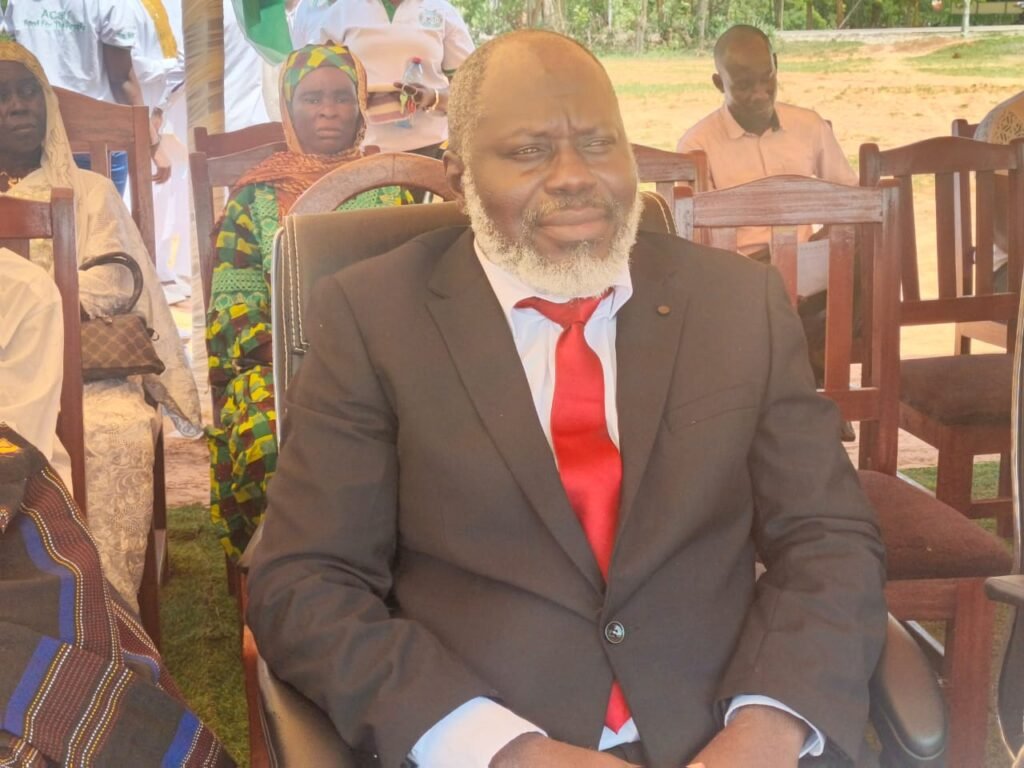
Cue Audio of Dagrico principal)
Delivering the keynote address, the Upper West Regional Director of Agriculture, Mr. Hudu Abu, congratulated the graduates and acknowledged the sacrifices behind their success. “Your success did not come easily. You endured long hours of study, practical fieldwork and challenges that tested your determination, yet you have emerged victorious,” he said. He also challenged them to rethink their approach to employment, stressing that, “The world no longer needs graduates who only seek jobs; it needs graduates who can create jobs.”
Speaking on the theme of ATVET and its role in promoting employment, economic prosperity and food security, he emphasized the importance of agriculture as the backbone of the economy while highlighting the need for innovation, skills development and investment in modern agricultural practices. He encouraged graduates to explore opportunities across the agricultural value chain and contribute to national development through knowledge, creativity and entrepreneurship.
(Cue Audio of Upper West Regional Director of Agriculture)
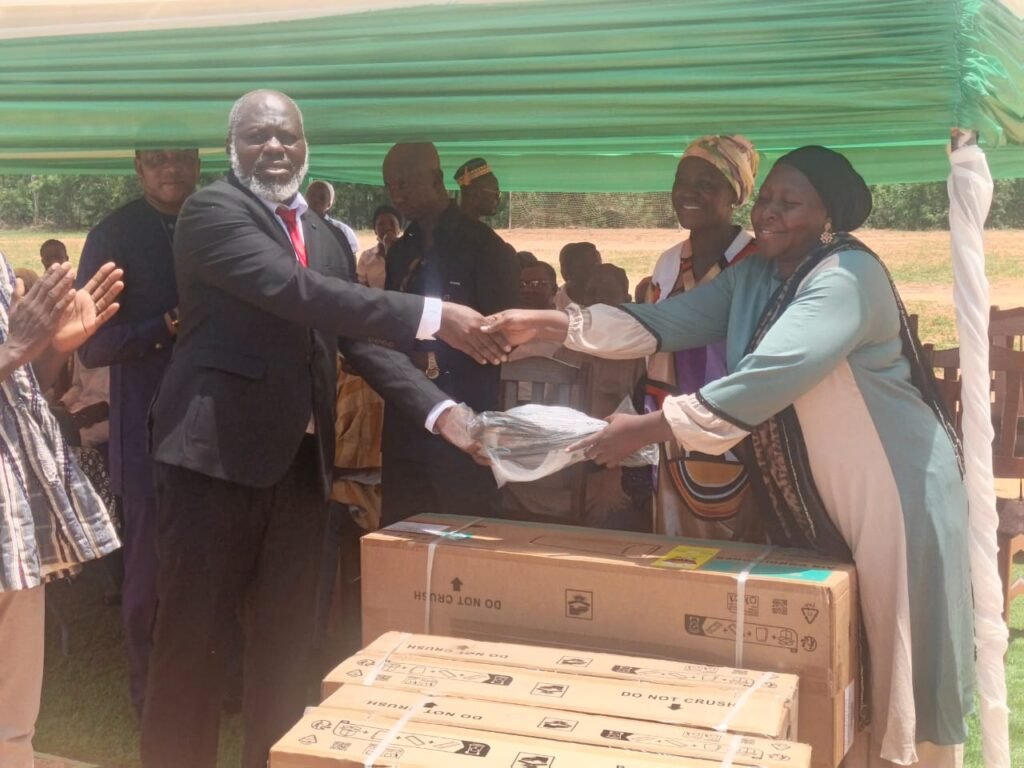
The ceremony was further enriched by acts of generosity and commitment. The chairman, HE. Tingawura Alhaji Seidu Sampson Abudu, pledged his support to the institution, assuring that he would use his position to engage the Savannah Regional Minister to address the college’s pressing needs. In a show of goodwill, he donated two air conditioners and an amount of GHS 20,000, allocating GHS 5,000 for teachers’ motivation, GHS 5,000 for the Students’ Representative Council, and GHS 10,000 to support the running of the school. Old students of the college also donated two air conditioners, demonstrating their continued attachment and support to their alma mater.
A highlight of the ceremony was the recognition of outstanding students, who were honoured with awards and citations for excellence in both academic performance and discipline.
As the event came to an end, appreciation was extended to staff, parents and all stakeholders, while prayers were offered for peace, prosperity and divine guidance for the graduates as they step into a new phase of life.
The 26th graduation ceremony ultimately stood not just as a celebration of academic achievement, but as a powerful reminder of the vital role of agricultural education in national development, with the graduates stepping forward as future innovators, job creators and champions of food security in Ghana and beyond.