



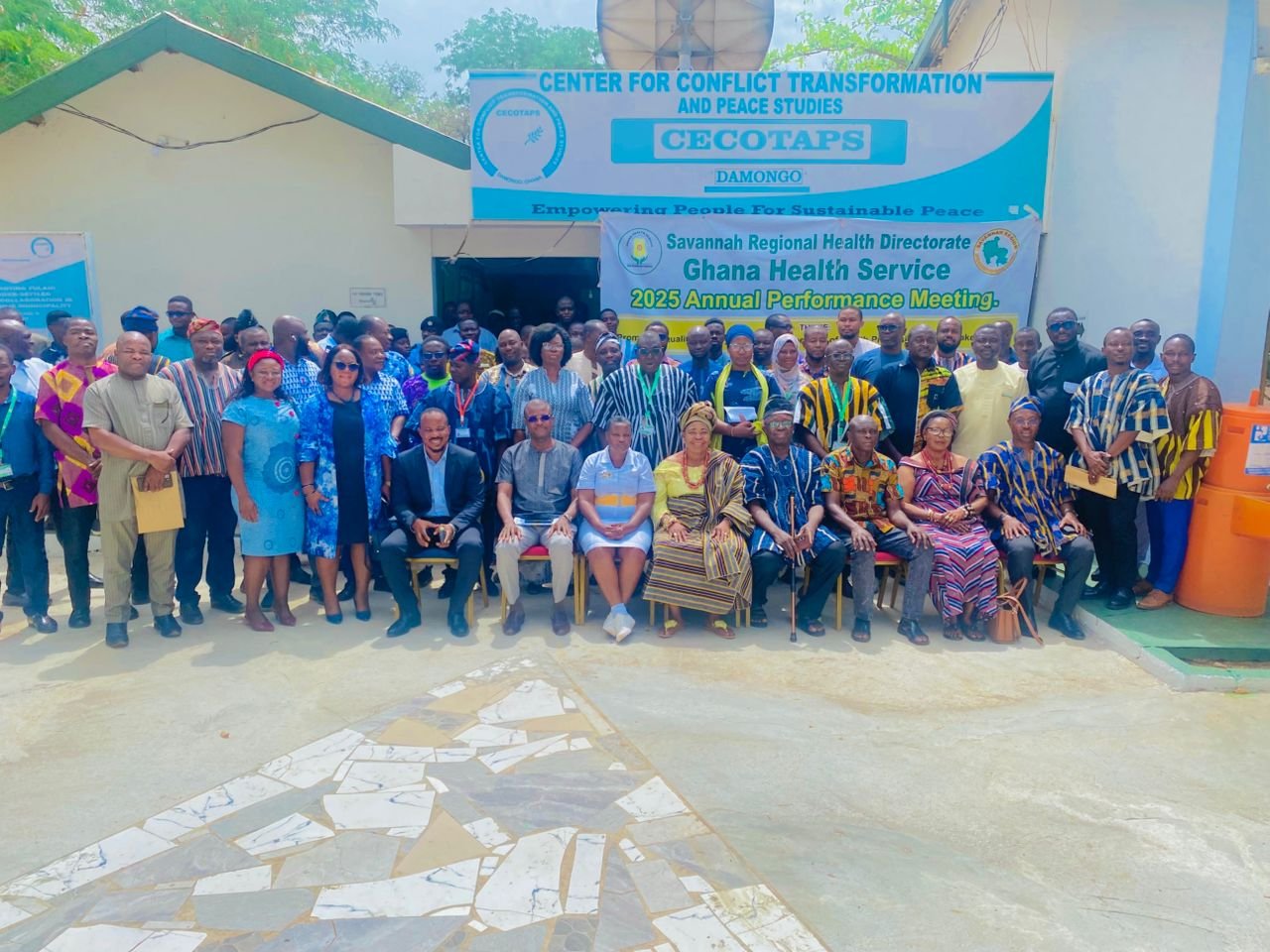
The Savannah Regional Health Directorate of the Ghana Health Service has held its 2025 Annual Performance Review Meeting, with a strong call on health professionals and stakeholders to intensify efforts toward improving quality primary healthcare delivery across the region.
The meeting, held on Wednesday, March 25, 2026, at the Damongo Unity Centre, was under the theme: “Promoting Quality Primary Health Care: The Role of Health Professionals and Stakeholders.”
Delivering his keynote address, the Regional Director of Health Services, Dr. John Ekow Otoo, highlighted both achievements and challenges recorded in the region’s health sector over the past year.
According to him, significant progress was made in key health indicators. Skilled delivery increased from 62.8 percent to 67.6 percent, while postnatal care within 48 hours rose sharply from 87.1 percent in 2024 to 98.8 percent in 2025. He added that the institutional maternal mortality ratio reduced from 82 to 54 per 100,000 live births.
Dr. Otoo further noted that the region maintained zero under-five malaria case fatality, while mother-to-child transmission of HIV dropped from 2.2 percent to 0.6 percent. Tuberculosis case fatality also declined from 7 percent to 2 percent.
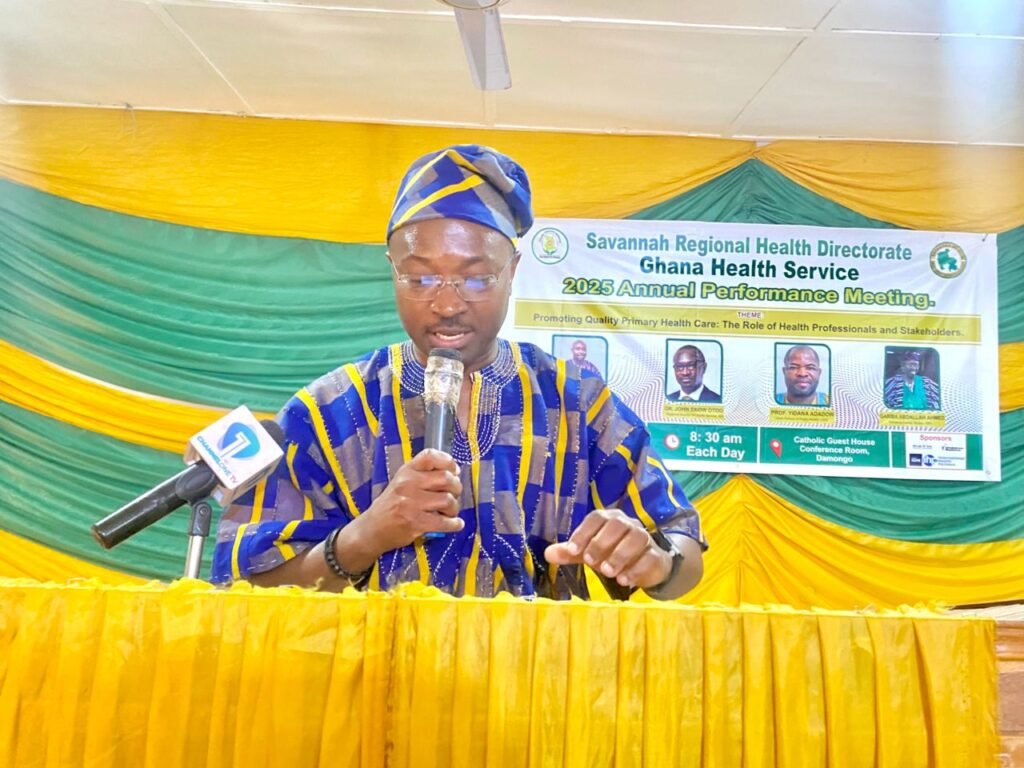
Despite these gains, he expressed concern over declining family planning acceptance rates, which dropped from 23.0 percent to 18.1 percent, as well as a decrease in IPT3 coverage.
On human resources, the Regional Director disclosed that 147 health workers were recruited in 2025, including nurses, midwives, and other professionals. However, he revealed that although 17 medical doctors were posted to the region, only four are currently at post, raising concerns about staffing gaps.
Dr. Otoo also outlined key challenges affecting healthcare delivery in the region, including long travel distances, inadequate logistics, and limited financial resources. He further indicated that conflicts in some parts of the region, particularly in Sawla-Tuna-Kalba and Bole, disrupted health service delivery.
On public health emergencies, he reported that the region recorded 32 suspected Mpox cases, with only two confirmed and no deaths. He also commended collaboration with veterinary and environmental health authorities in managing the death of over 200 cattle in North Gonja without any transmission to humans.
The Director announced that the region has begun rolling out the Human Papillomavirus (HPV) vaccine as part of routine immunization and reaffirmed the Directorate’s commitment to improving healthcare infrastructure, logistics, and staff welfare.
In a solidarity message delivered on behalf of the Director-General of the Ghana Health Service, Dr. Frank Atuguba commended health workers for their dedication despite persistent systemic challenges, describing their efforts as critical to sustaining healthcare delivery in underserved areas.
He, however, stressed the need for stronger leadership and accountability at all levels of the health system, urging Regional Directors and facility heads to intensify supervision, enforce discipline, and ensure the consistent availability of essential medicines, consumables, and logistics.
Dr. Atuguba emphasized prudent financial management, particularly the responsible use of internally generated funds, noting that such resources must be strategically invested in maintenance and operational sustainability. He further called for closer monitoring of underperforming facilities and districts, as well as increased visibility of leadership through regular field engagements.
He also highlighted the importance of strengthening patient grievance redress mechanisms to improve client satisfaction and build public confidence in the health system, especially for vulnerable populations.
Touching on policy direction, Dr. Atuguba announced the government’s upcoming Free Primary Health Care Policy, describing it as a transformative intervention aimed at removing financial barriers to healthcare access. He noted that the policy will prioritize preventive services, population-based screening, health education, and community engagement, and called on all stakeholders to prepare adequately to ensure its successful rollout.
Guest Speaker, Prof. Yidana Adadow, Dean of the School of Public Health at the University for Development Studies, delivered a thought-provoking address, emphasizing that access to healthcare without quality is meaningless.
According to him, “coverage without quality is an empty promise,” stressing that the true measure of healthcare delivery lies not just in access, but in the standard of care patients receive.
He explained that quality primary healthcare must be people-centered, safe, effective, timely, equitable, and efficient, and urged both health professionals and stakeholders to work collaboratively in building a resilient and responsive health system.
Prof. Adadow further drew attention to the need for a balanced approach to healthcare delivery, referencing global frameworks that emphasize the importance of structure, process, and outcomes. He noted that while infrastructure and logistics are critical, the attitude, communication, and professionalism of health workers remain central to achieving quality care.
He also highlighted the unique geographical and social dynamics of the Savannah Region, stressing the need for innovative and culturally sensitive approaches to healthcare delivery. He encouraged health professionals to act as bridges between modern medicine and local traditions, ensuring that communities understand and trust the services being provided.
Prof. Adadow underscored the critical role of traditional leaders and community authorities, describing them as key drivers of trust and behavioural change. He noted that their influence is essential in promoting early health-seeking behaviour, improving immunization uptake, and addressing harmful cultural practices.
He concluded by calling for a culture of accountability and data-driven decision-making, urging stakeholders to focus not only on the number of patients served but on the number of lives improved.
The meeting brought together key stakeholders, including government officials, traditional authorities, health professionals, development partners, and members of the media, to review performance and strategize for improved service delivery.
Participants were urged to prioritize quality healthcare delivery as Ghana prepares to roll out major reforms in the health sector, including the Free Primary Health Care Policy.