



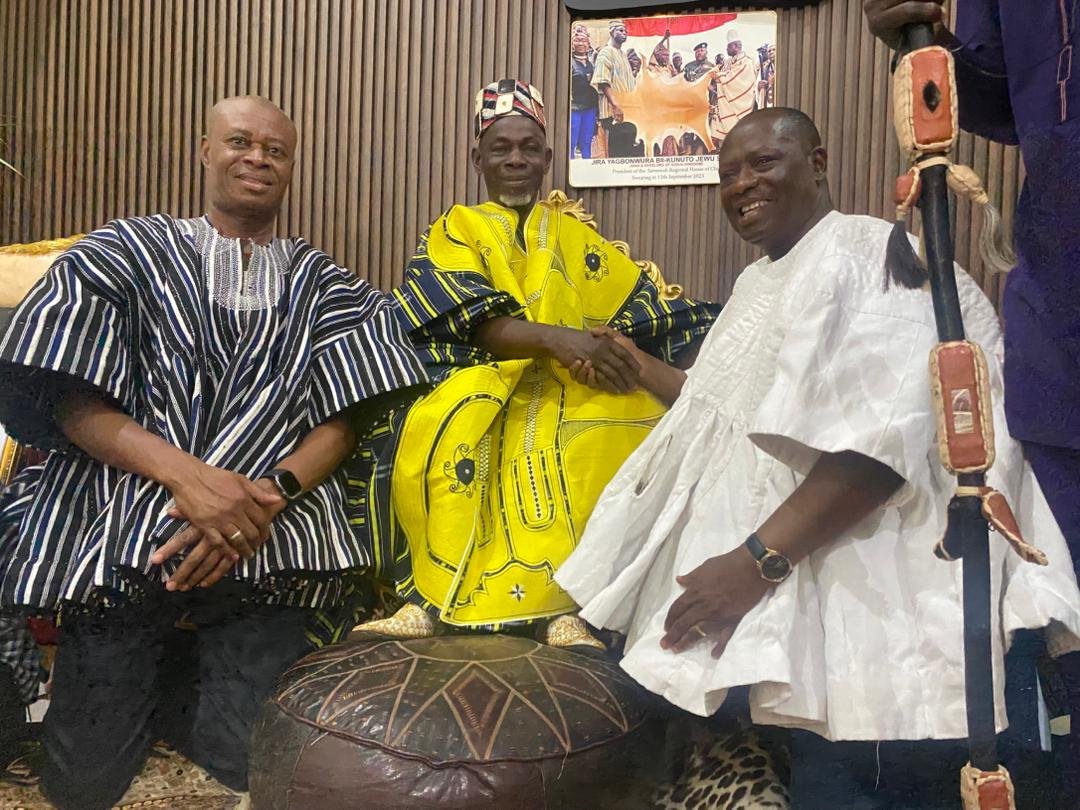
The Minister for Lands and Natural Resources, Emmanuel Armah Kofi Buah, has secured the backing of the Gonja Traditional Authority in the government’s intensified fight against illegal mining, as well as its push to promote responsible and sustainable resource extraction across northern Ghana.
The Minister made the appeal during a courtesy call on the Overlord of the Gonja Kingdom, Yagbonwura Bii-Kunuto Jewu Soale I, at the Jakpa Palace in Damongo on Thursday, March 26, 2026, as part of his official tour of the northern sector.
The visit underscored the government’s renewed commitment to tackling illegal mining, popularly known as galamsey while expanding regulated opportunities in the mining sector to create jobs, particularly for the youth.
Addressing the Yagbonwura and his council of elders, the Minister expressed deep appreciation for the warm reception and emphasized the importance of engaging traditional authorities in national development efforts.
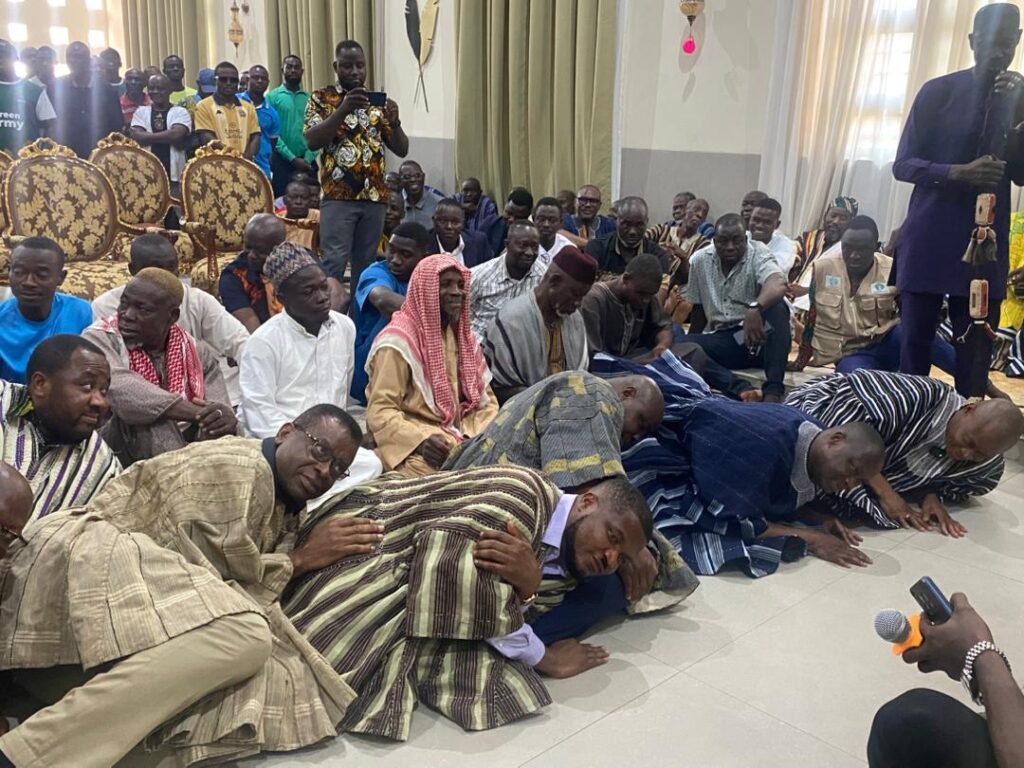
“I come with a grateful heart, not only to Your Majesty but to the good people of Gonjaland. It is only right that we seek your blessings and guidance as we undertake this important national duty,” he stated.
He reiterated that while gold mining remains a critical economic activity, it must be carried out responsibly and within the framework of the law to prevent environmental degradation. He stressed that Ghana’s natural resources—especially land and water bodies—are a shared heritage that must be preserved for future generations.
“We are only custodians of these God-given resources, and we must ensure that we leave them in the same condition we inherited them,” the Minister noted.
He further revealed that the government, under the leadership of John Dramani Mahama, is implementing strategic interventions aimed at formalizing small-scale mining. These include training programmes, provision of equipment, and the designation of approved mining zones.
Central to these efforts is the Responsible Cooperative Mining Programme, which seeks to create sustainable employment while ensuring adherence to environmental standards. The initiative is being complemented by measures such as the Blue Water Guard, aimed at protecting the country’s water bodies from pollution.
(Cue audio of lands minister)
In response, the Paramount Chief of the Mankpan Traditional Area and a Council of State member, Mankpanwura Jakpa Acho-Ade Borenyi, speaking on behalf of the Yagbonwura, welcomed the Minister’s visit and pledged the support of the Gonja Traditional Council.
He commended the Minister for recognizing the importance of traditional leadership and collaboration in addressing national challenges, particularly illegal mining.
The chief highlighted the vast natural resource potential of Gonjaland, describing it as one of the largest land areas in Ghana, endowed with valuable resources including salt in Daboya, gold deposits in Bole, as well as lithium and oil prospects across several districts. He added that the area is also rich in rivers, water bodies, and game reserves.
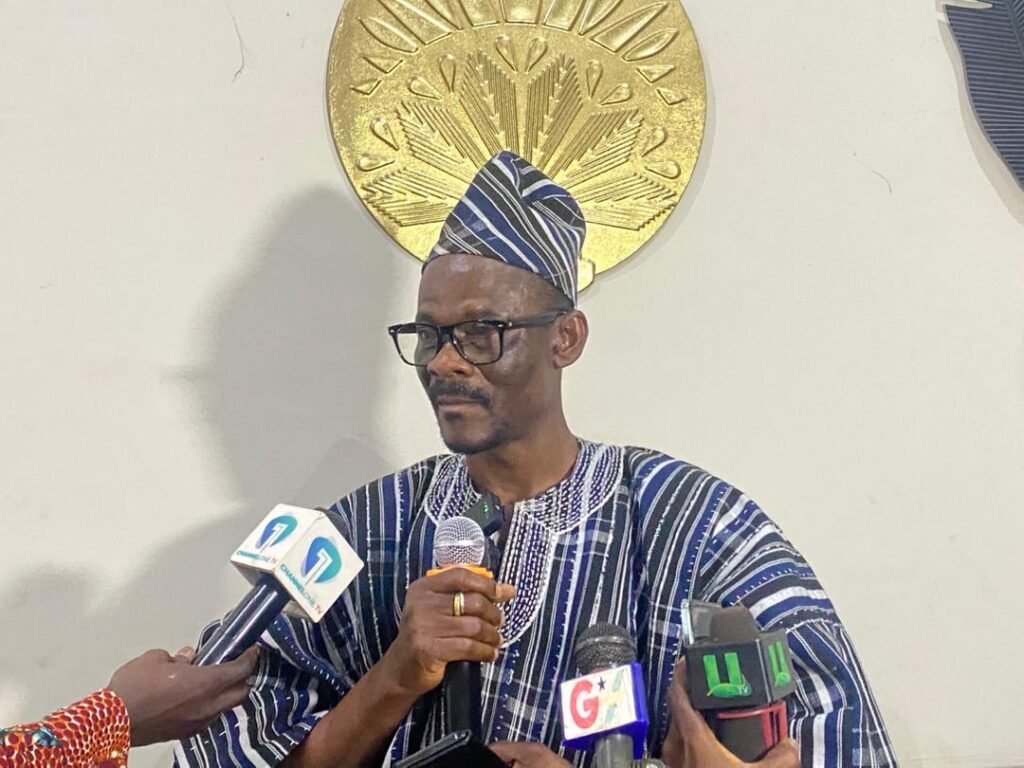
While expressing appreciation to President Mahama for his leadership within his first year in office, the traditional authority also praised the Lands Minister for what he described as visible improvements in the restoration of polluted water bodies.
“He has shown commitment and dedication, and we are proud of the work he is doing,” he said.
However, the chief raised concerns over the continued destruction of the environment through illegal mining, noting the difficult reality that many young people depend on such activities for survival.
“We are not happy seeing our lands destroyed, but this is how many of our young people survive,” he lamented.
He therefore called on the government to intensify efforts in creating alternative livelihood opportunities, particularly through the expansion of regulated small-scale mining in the area. According to him, such interventions would help strike a balance between environmental protection and economic survival.
(Cue audio of Mankpanwura)
The engagement highlights the critical role of traditional authorities in supporting government policies and mobilizing local communities in the fight against illegal mining, as Ghana continues to pursue sustainable natural resource management for national development.